

What Is Lidarmos?
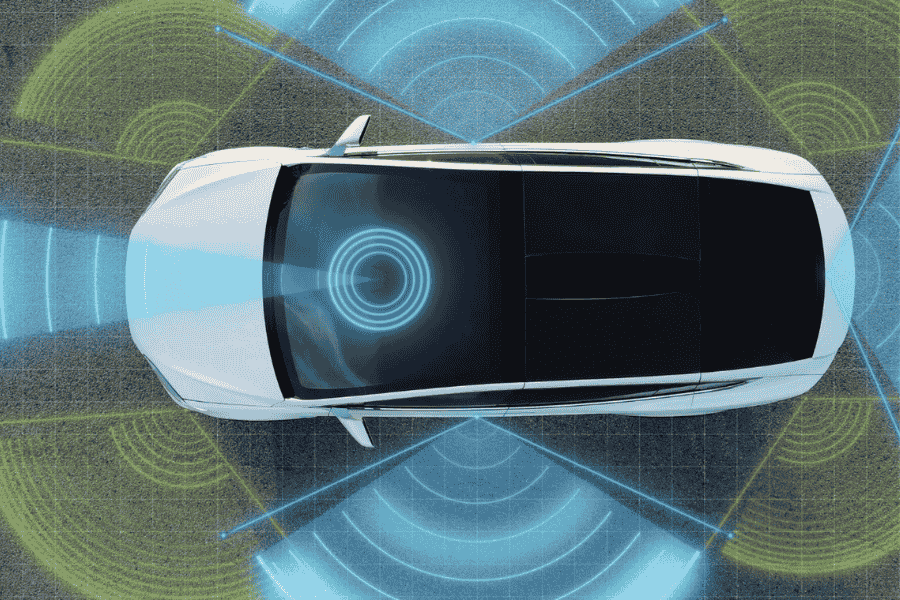
If you’ve ever marveled at a self-driving car navigating flawlessly through city traffic or seen a detailed 3D terrain model online, Lidarmos technology is likely behind it. This stands for Light Detection and Ranging Modular Systems, a cutting-edge approach to 3D scanning and spatial awareness using laser light.
At its core, the uses laser pulses to measure distances between a sensor and surrounding objects. The data creates a high-resolution 3D “map” of the environment, accurate down to centimeters. This makes it indispensable for industries like autonomous vehicles, construction, archaeology, and environmental monitoring.
In this guide, you’ll learn how Lidarmos works, where it’s used, and why it’s shaping the future of precision mapping and automation.
How Lidarmos Works: A Simple Breakdown
At a glance, Lidarmos might sound complex but the process is straightforward once you break it down.
-
Emission of Laser Pulses:
The system sends thousands of laser beams every second toward the target area. -
Reflection Detection:
Each beam bounces off surfaces and returns to the sensor. The time it takes to return is measured. -
Distance Calculation:
Using the speed of light, the system calculates distances for every reflection. -
3D Point Cloud Generation:
All those distance points combine to form a detailed 3D representation of the scanned environment.
Unlike cameras, it doesn’t rely on ambient light. It works in darkness, fog, or glare, providing consistent accuracy under any condition.
Why Lidarmos Matters Today
In a world increasingly run by automation and data, real-world spatial understanding is priceless. Lidarmos gives machines that ability.
For instance, Tesla, Waymo, and Volvo rely on LiDAR-based systems for real-time navigation. Archaeologists use it to uncover lost cities beneath dense forests, while civil engineers use it to assess terrain before building roads or bridges.
Without these achievements would either take months longer or be impossible entirely.
Top Industries Using Lidarmos
1. Autonomous Vehicles
Self-driving cars depend on Lidarmos sensors to “see” the world around them.
-
Detects obstacles within milliseconds
-
Creates real-time 3D maps for navigation
-
Works flawlessly in low light
Major players: Waymo, Cruise, and Aurora have integrated these systems for advanced perception.
2. Construction and Surveying
Engineers use Lidarmos-equipped drones to scan large areas accurately.
-
Reduces field time by up to 70%
-
Enables detailed topographic mapping
-
Supports early error detection
3. Environmental and Agricultural Monitoring
From monitoring forests to optimizing irrigation, Lidarmos enhances sustainability efforts.
-
Tracks vegetation health
-
Measures crop height and density
-
Helps in flood and erosion prediction
4. Archaeology and Heritage Preservation
Historic preservation has been transformed by Lidarmos scanning.
-
Reveals buried ruins beneath vegetation
-
Digitally preserves fragile sites
-
Provides data for VR museum experiences
Example: The rediscovery of Mayan cities in Guatemala was powered by LiDAR mapping technology.
Advantages of Lidarmos
-
High Precision: Millimeter-level accuracy in distance measurements
-
Speed: Scans vast areas in minutes
-
Versatility: Works on drones, cars, or handheld devices
-
All-Weather Reliability: Functions in rain, fog, or darkness
-
Non-Invasive: Ideal for archaeological or conservation sites
These benefits make one of the most adaptable sensing technologies in the world today.
Challenges and Limitations
While Lidarmos is groundbreaking, it’s not perfect.
-
Cost: High-end Lidarmos units can cost thousands of dollars.
-
Data Overload: Processing massive point clouds requires strong computing power.
-
Integration Complexity: Requires alignment with other sensors like cameras or GPS.
Despite these hurdles, ongoing R&D is rapidly reducing costs and improving accessibility for small-scale users.
Future of Lidarmos Technology
Expect Lidarmos systems to become smaller, smarter, and cheaper. Emerging startups are already developing solid-state sensor devices without moving parts that offer greater durability and precision.
Soon, your smartphone or AR headset could use this to map your surroundings instantly for gaming, navigation, or design visualization.
FAQs
Q: Is Lidarmos the same as LiDAR?
A: Not exactly. This refers to modular LiDAR systems customizable and integrated with AI or cloud-based processing for modern applications.
Q: How accurate is Lidarmos?
A: Depending on the model, accuracy can range from ±1 to ±5 centimeters, making it ideal for precise mapping.
Q: Can Lidarmos work at night?
A: Yes. Since it uses laser pulses rather than visible light, it performs equally well in total darkness.
Q: Is Lidarmos used in smartphones?
A: Some premium smartphones, like the iPhone Pro series, already use miniature versions of this technology for depth sensing and AR.
Q: What’s the future of Lidarmos?
A: Expect widespread adoption in AR/VR, robotics, and smart cities, as sensors become more compact and affordable.
Conclusion
Lidarmos isn’t just another sensor it’s the eyes of the modern world. Whether guiding autonomous vehicles, mapping ancient ruins, or modeling entire cities, its influence is expanding rapidly.
As costs drop and accessibility rises, expect to move from specialized industries to everyday devices, bringing 3D awareness to the masses.
If you’re in tech, engineering, or creative industries, now is the time to understand and embrace this technology.
